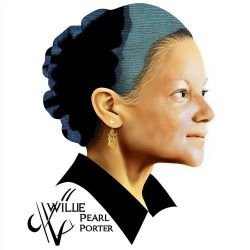
Legacy of Leadership: The Life and Contributions of Willie Pearl Porter, R.N., B.S., M.S.
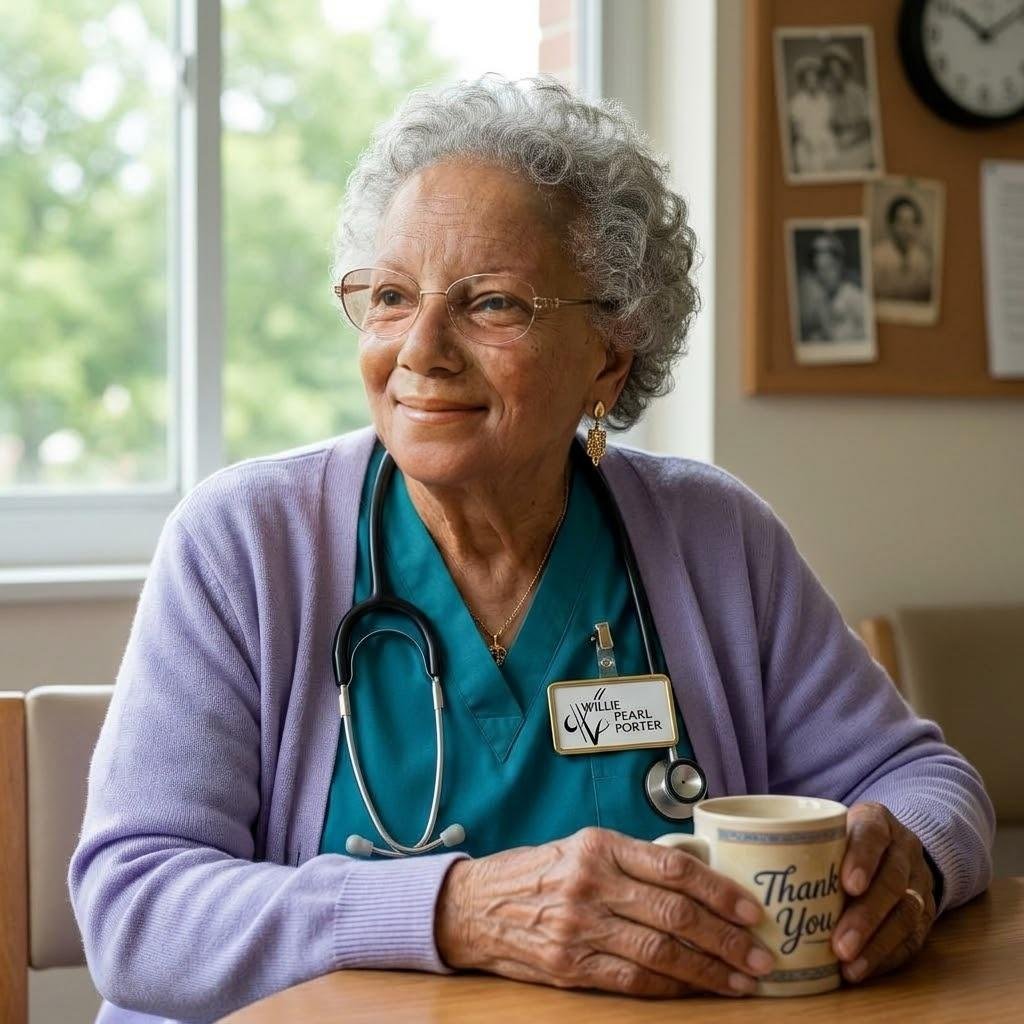
1. Biographical Overview and "Living through Giving" Philosophy
Willie Pearl Porter (October 5, 1911 – March 15, 2017) was a trailblazing matriarch of the nursing profession whose life spanned over a century of profound social and clinical evolution. A pedagogical pioneer and institutional cornerstone, Mrs. Porter dedicated 105 years to the advancement of healthcare and the elevation of minority practitioners. Central to her legacy was her "Living through Giving" philosophy—a selfless mandate that transformed her professional expertise into a lifelong mission of service. As a world traveler and lifelong learner, she served as a compass for generations of nurses, ensuring that the path to excellence remained open to those from underrepresented backgrounds.
2. Formative Years and Educational Foundation
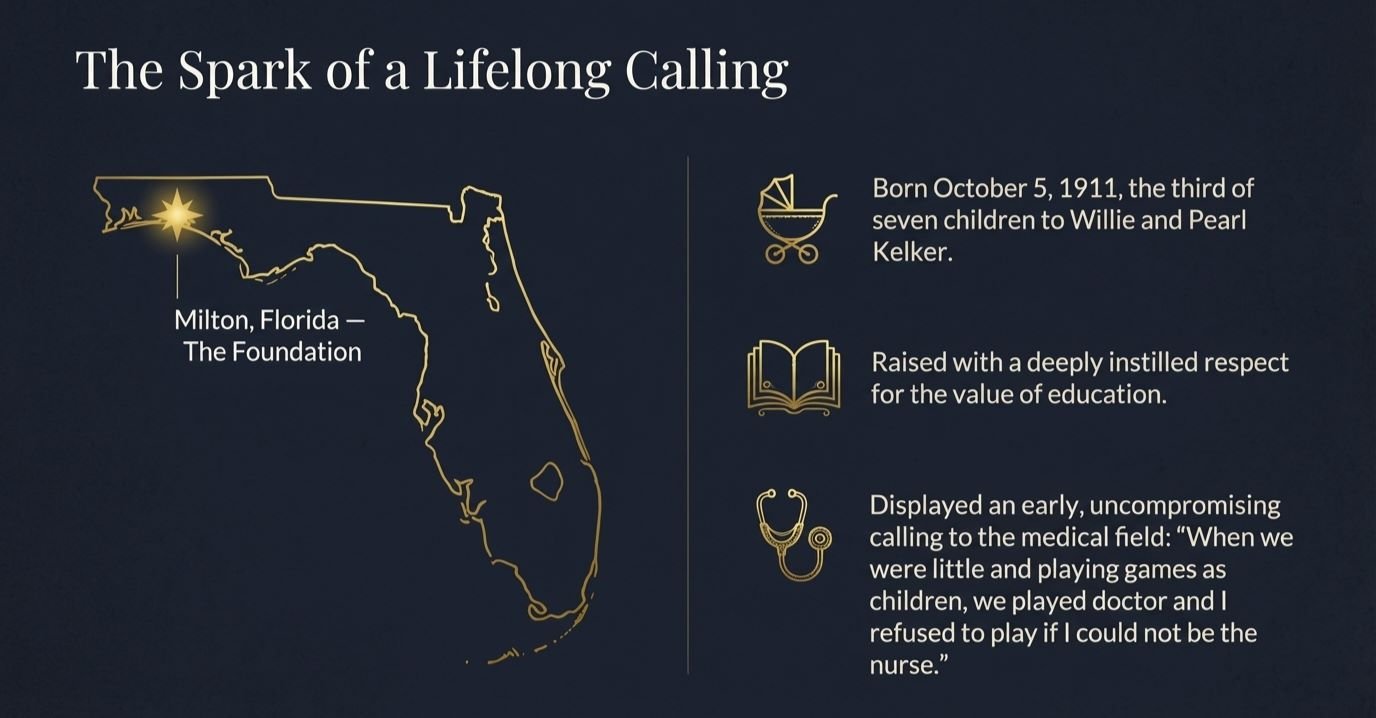
Born in Milton, Florida, to Willie and Pearl Kelker, Willie Pearl was the third of seven children. Her parents instilled a rigorous respect for the transformative power of education, a value that would define her century-long journey. Her calling to nursing was evident in early childhood; she famously recounted that during neighborhood games of "doctor," she would refuse to participate unless she was cast in the role of the nurse. This early resolve led her to seek training at some of the most prestigious, historically significant institutions available to African American women during the era of segregation.
Educational Milestones
Year/Period
Institution
Credential Earned
1933
Washington High School (Pensacola, FL)
High School Diploma
1935
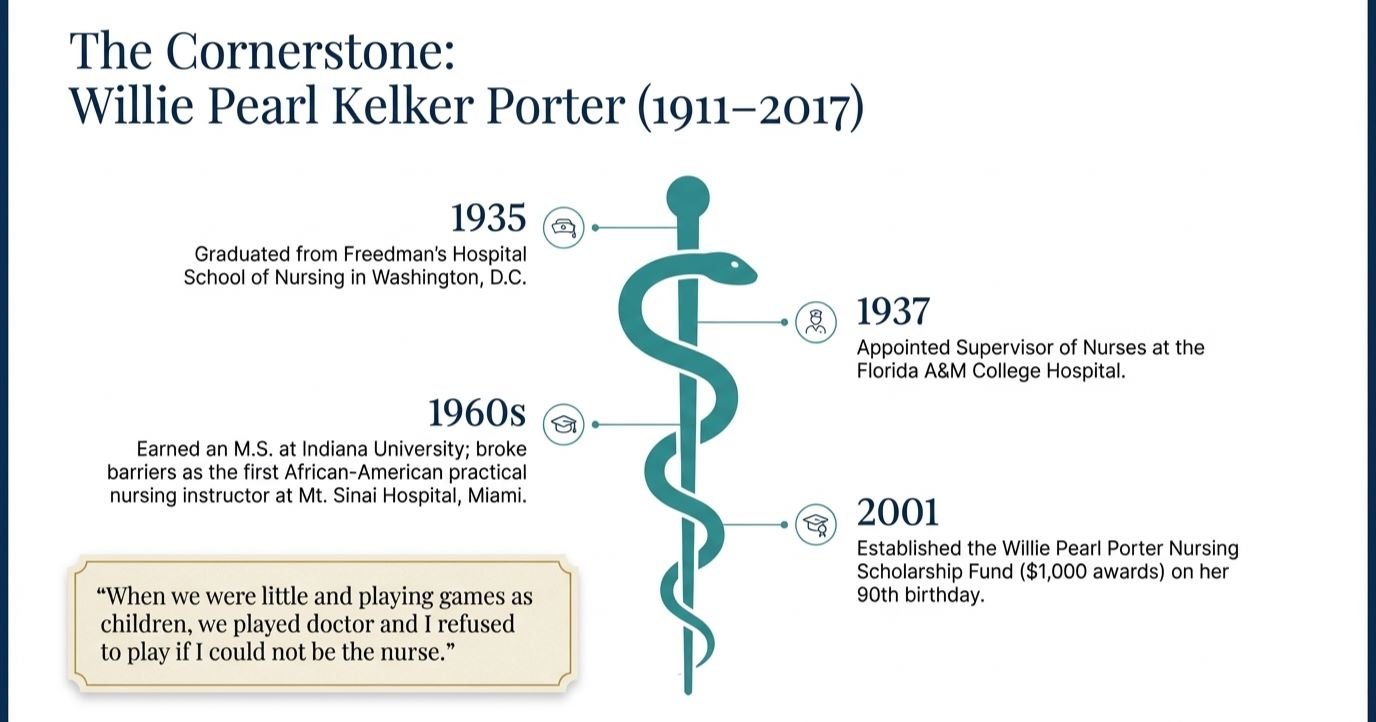
Freedman’s Hospital School of Nursing (Washington, D.C.)
Registered Nurse (R.N.) Certification
1937–1965
Florida A&M University (Tallahassee, FL)
Bachelor of Science (B.S.) in Sociology
Post-Graduate
Indiana University (Bloomington, IN)
Master of Science (M.S.) in Medical and Surgical Nursing
Her training at Freedman’s Hospital School of Nursing—a legendary institution established to provide medical education to Black professionals—laid the groundwork for her role as a leader in a segregated healthcare system. Demonstrating her commitment as a "lifelong learner," she pursued her higher degrees while simultaneously maintaining demanding supervisory roles.
3. Professional Career and Pioneering Roles
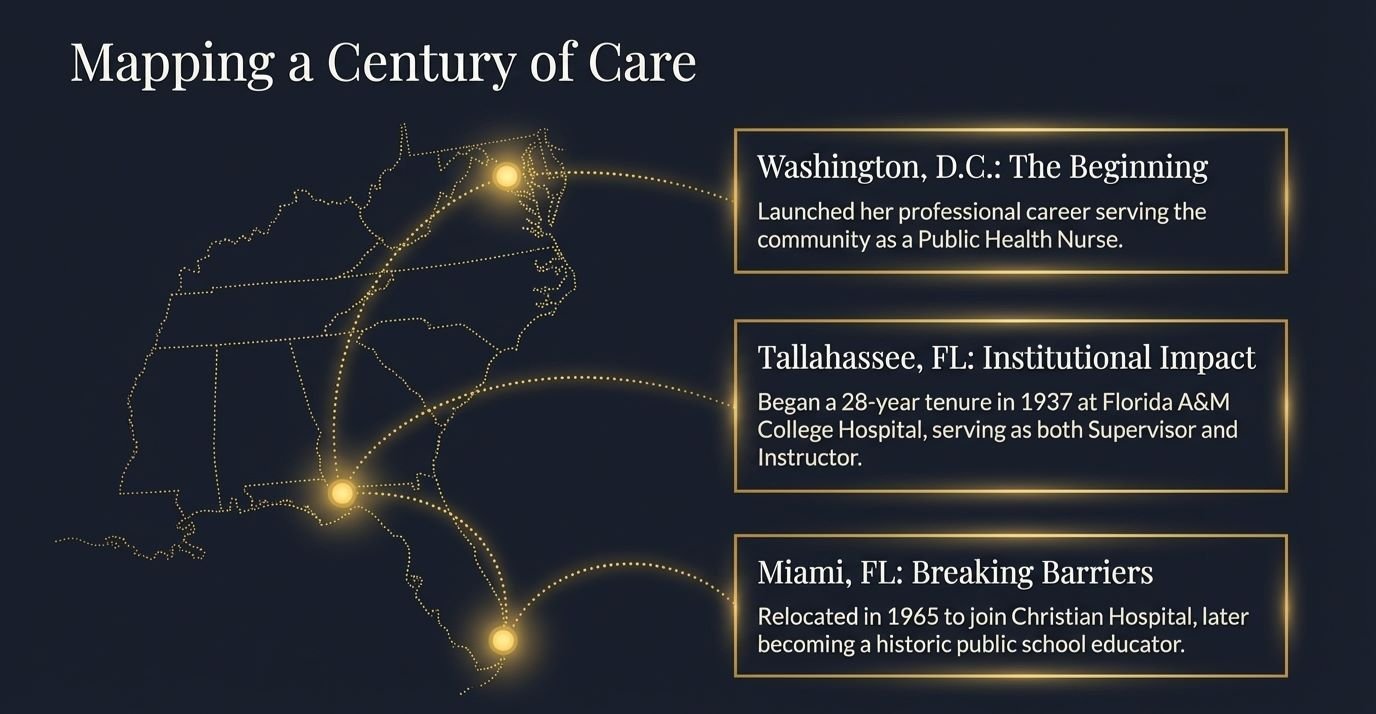
Porter’s career was a series of historic firsts, navigating the complexities of healthcare across three distinct geographic phases.
- Washington, D.C.: Following her graduation from Freedman’s, she began her professional journey as a Public Health Nurse in the nation’s capital, providing essential community care during a critical era for urban health.
- Tallahassee & Florida A&M University: In 1937, Porter returned to Florida to serve as the Supervisor of Nurses at the Florida A&M College Hospital. Over a 28-year tenure, she served as a health instructor and the School Nurse for Lucy Moton, the college's high school. During this time, she was a vital figure in the Tallahassee professional community alongside her husband of over 55 years, the late Dr. Gilbert Lawrence Porter.
- Miami Transition: In 1965, the Porters relocated to Miami. Mrs. Porter initially joined the staff at Christian Hospital, a vital historically Black institution. She then shattered systemic barriers at Mount Sinai Hospital, where she became the first African American ever appointed as an instructor in their School of Practical Nursing.
- Secondary Education: Following the closure of the Mount Sinai nursing program, Porter transitioned to the public sector to inspire younger students. She served as a teacher at Miami Jackson High School and Miami Senior High School until her retirement from the school system in 1973.
Even in her personal life, Porter remained an icon of Miami culture, holding the distinction of being the oldest living fan of the Miami Dolphins.
4. Philanthropy: The Willie Pearl Porter Nursing Scholarship Fund
To commemorate her 90th birthday, Porter formalized her commitment to the future of the profession by establishing the Willie Pearl Porter Nursing Scholarship Fund. This fund specifically targets deserving high school students who are transitioning into nursing programs, providing the "fuel" needed to overcome financial hurdles.
As of 2017, the fund had awarded ten individual scholarships of $1,000 each. Beyond individual grants, Porter extended her philanthropic reach by providing institutional scholarship support to her alma mater, Florida A&M University, as well as the University of Central Florida and Howard University.
5. Professional Affiliations and Community Service
Porter’s civic engagement was exhaustive, reflecting her belief that a professional’s duty extends far beyond the clinical setting.
Nursing & Healthcare Organizations
- National Black Nurses Association (Miami Chapter)
- Freedman’s Hospital School of Nursing Alumni
- American Heart Association (Citizen and Volunteer of the Year)
- The Caring Hearts Health Care Ministry
Civic & Community Groups
- Alpha Kappa Alpha Sorority, Inc. (Delta Kappa Omega Graduate Chapter, Tallahassee; and Miami Chapter)
- Florida A&M University Alumni Association
- AARP
- Family Christian Association of America’s Maturity Club
- Saints Ann-Margaret Episcopal
- Church Women’s Association
For over 65 years, she was a cornerstone of The Church of Incarnation, where she was eventually elevated to the revered position of "Mother of the Church."
6. Guidance for Aspiring Minority Nursing Students
Porter’s legacy of mentorship is distilled into these guiding principles for minority students navigating the nursing field:
Five Guiding Principles
- Embrace Cultural Identity as a Strength: Cultural background is a "superpower" that fosters trust and enriches patient care within diverse populations.
- Seek Out Mentorship Early and Often: Find guides who understand the specific academic and social challenges faced by minority students.
- Navigate Financial Aid Strategically: Actively pursue specialized funding from organizations dedicated to increasing diversity in the workforce.
- Build a Support System: Cultivate a community—through faith, family, or professional associations—that provides emotional resilience.
- Stay Connected to the "Why": A clear personal mission is the best defense against the rigors of clinical training.
Resource Organizations for Minority Nurses
- National Black Nurses Association (NBNA)
- National Association of Hispanic Nurses (NAHN)
- National Coalition of Ethnic Minority Nurse Associations (NCEMNA)
- Asian American/Pacific Islander Nurses Association (AAPINA)
- Black Nurses Rock
- American Association of Colleges of Nursing (AACN) Diversity Initiatives
7. Chronology of Honors and Recognition
Over nearly four decades, Mrs. Porter received a multitude of accolades for her pioneering spirit and community service:
- 1980: Outstanding and Dedicated Services Award, Afro-American Kiwanis Club
- 1981: Volunteer Activist Award, Jordan Marsh and Germaine Montiel Kiwanis
- 1982: Citizen of the Day, Citizens Federal Savings and Loan and Winz Radio
- 1983: Nurse of the Year Award, National Black Nurses Association, Miami
- 1984: Dade County’s Good People Award
- 1991: Florida A&M University Gallery of Distinction for the School of Nursing; American Heart Association Citizen of the Year and Volunteer of the Year
- 2007: Inducted into the Florida International University Archives for Nursing
- 2008: Award of Excellence, Black Nurses Association, Inc., Miami Chapter
- 2017: San Rufa Honoring The Legacy of Our Nursing Pioneers (A final tribute to her century of impact)
8. Conclusion: A Century of Impact
Willie Pearl Porter’s life serves as a testament to the power of a single individual to dismantle institutional barriers. Through her roles as a clinician, educator, and philanthropist, she transformed the landscape of nursing for African Americans in Florida and beyond. Her transition from a young girl playing nurse in Milton to a historic instructor at Mount Sinai remains an enduring source of inspiration. Her legacy of "Living through Giving" continues to serve as both a "compass and fuel," ensuring that the next generation of healthcare professionals can lead with the same courage and excellence she modeled for 105 years.